Ember
The floor, the kitchen, the cellar and the books — one system, in real time.
- 0
- User roles
- 0
- Data models
- 0
- Languages (EN/ES/AR/DE)
- 0
- Unit tests
A three-venue Miami restaurant group, digitised end to end: an interactive floor plan, a live kitchen display, per-seat ordering with split cheques, recipe-level stock depletion, menu engineering, rota and tip pooling. Twelve roles, four languages, and a demo you can actually run a service on.
- Next.js 16
- React 19
- TypeScript
- PostgreSQL
- Prisma 7
- Auth.js
- Tailwind v4
- Framer Motion
- next-intl
- Playwright
What was broken before
The POS did not know the kitchen. The kitchen did not know the stock. Food cost was a spreadsheet reconciled at month end and never quite believed.
Nobody could say which dishes were paying for the room. The steak sold well, so it stayed — nobody had ever costed the plate.
A table that had been sitting two hours was invisible until the host walked the floor and looked.
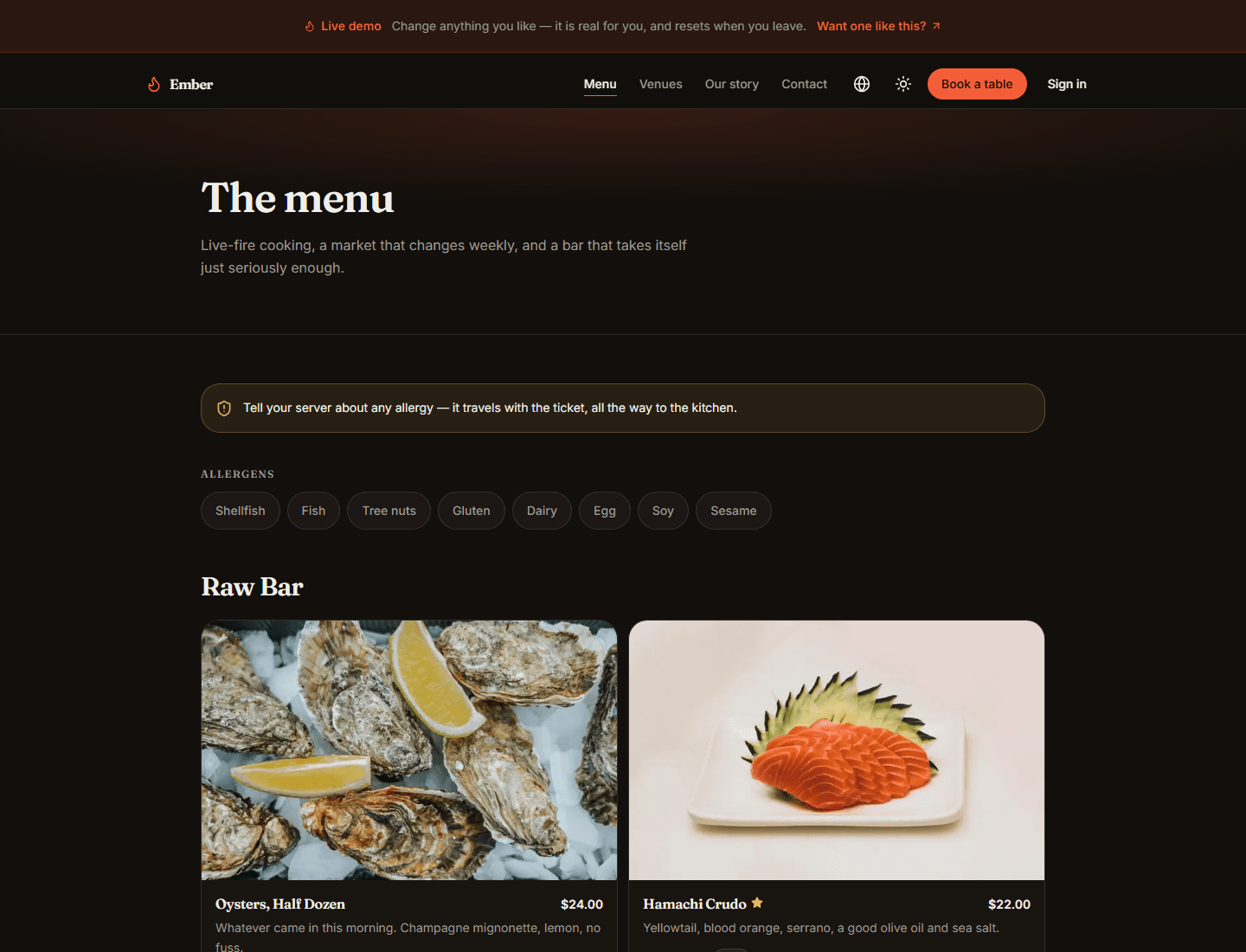
Allergies were written on a paper docket and copied by hand onto the kitchen ticket.
What we built
One system that knows all of it at once: firing a course depletes the ingredients, so theoretical food cost and actual food cost can finally be compared — and the gap between them priced.
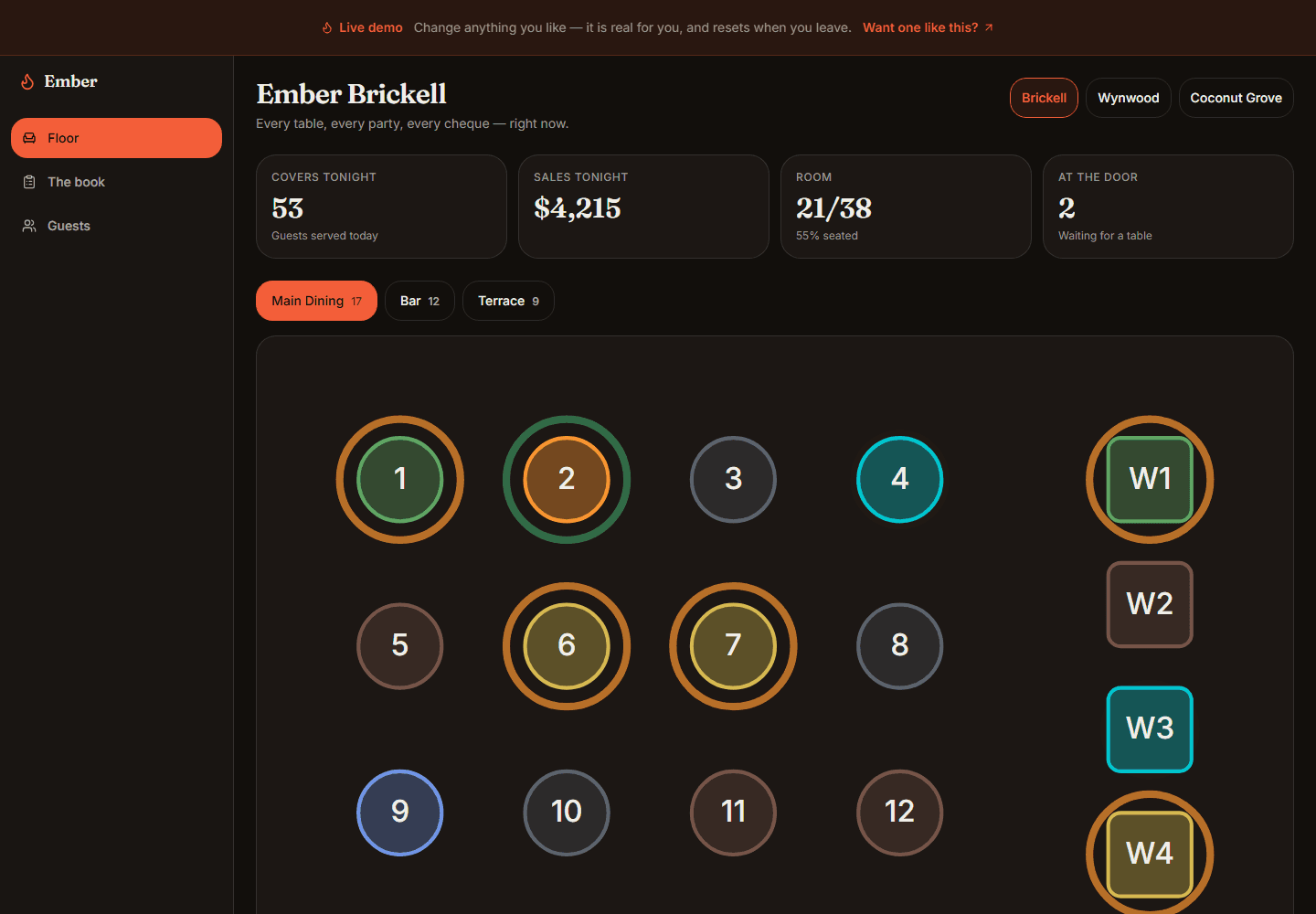
A floor plan that shows three things without anyone reading: where a party is in the meal, how long they have been sitting, and whether the kitchen is behind.
Money as integer cents throughout. Discount, then tax, then tip — and the tip on the pre-tax figure, because tipping on tax quietly inflates every gratuity in the building.
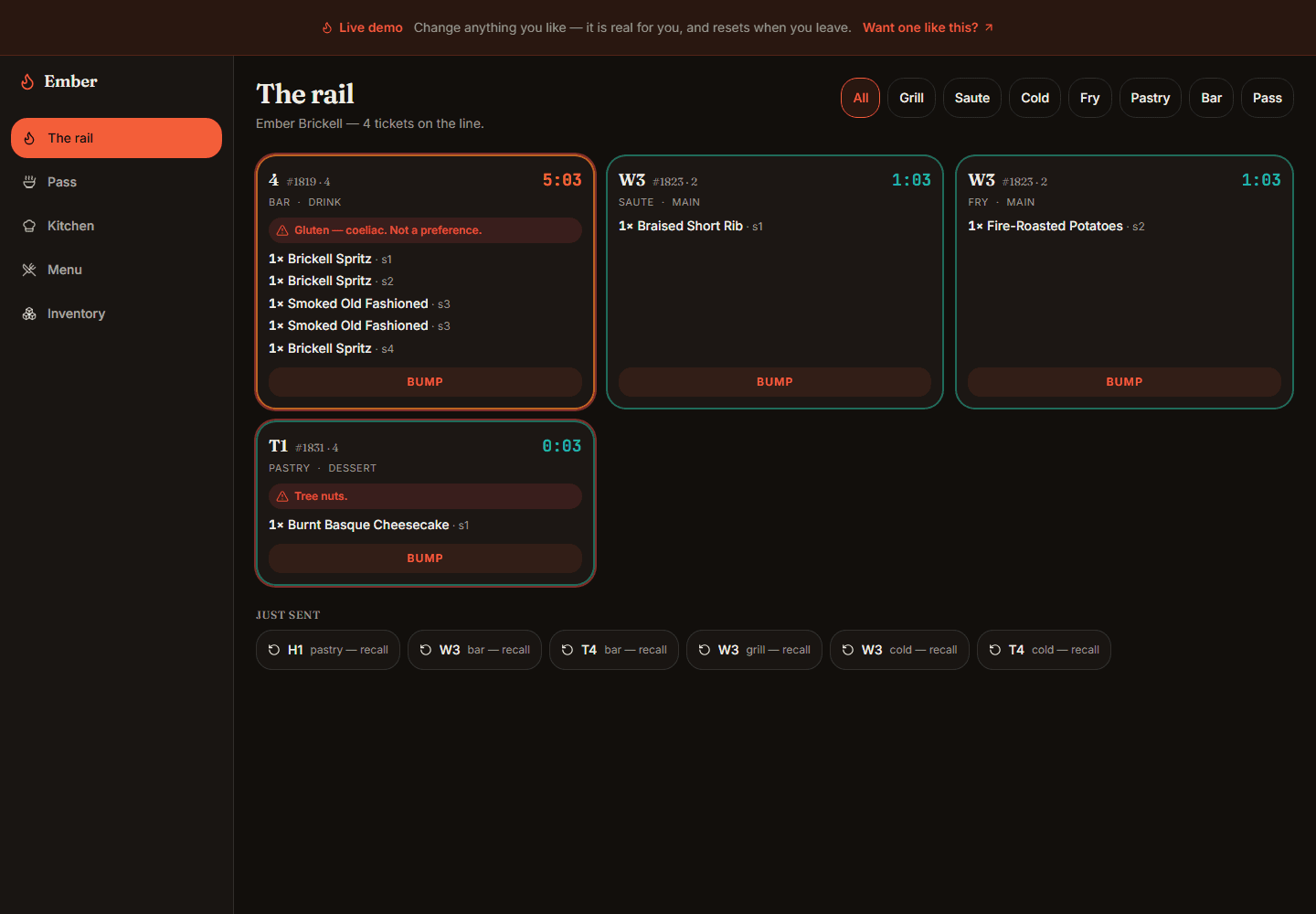
The allergy note travels with the ticket, in the destructive colour, all the way to the line cook. It is the most important sentence the system moves.
Inside Ember
The parts of the platform that do the real work.
The floor plan
The room assembles itself on load. A table's colour says where the party is in the meal; a ring around it reddens as they sit longer — because a two-hour table is not a colour problem, it is a turn you did not get.
The kitchen display
Tickets tint from cool to hot as they age — relative to the dish. Eight minutes is nothing on a 22-minute ribeye and a disaster on a 3-minute oyster plate. A KDS that paints both the same colour is one the kitchen stops believing.
Menu engineering
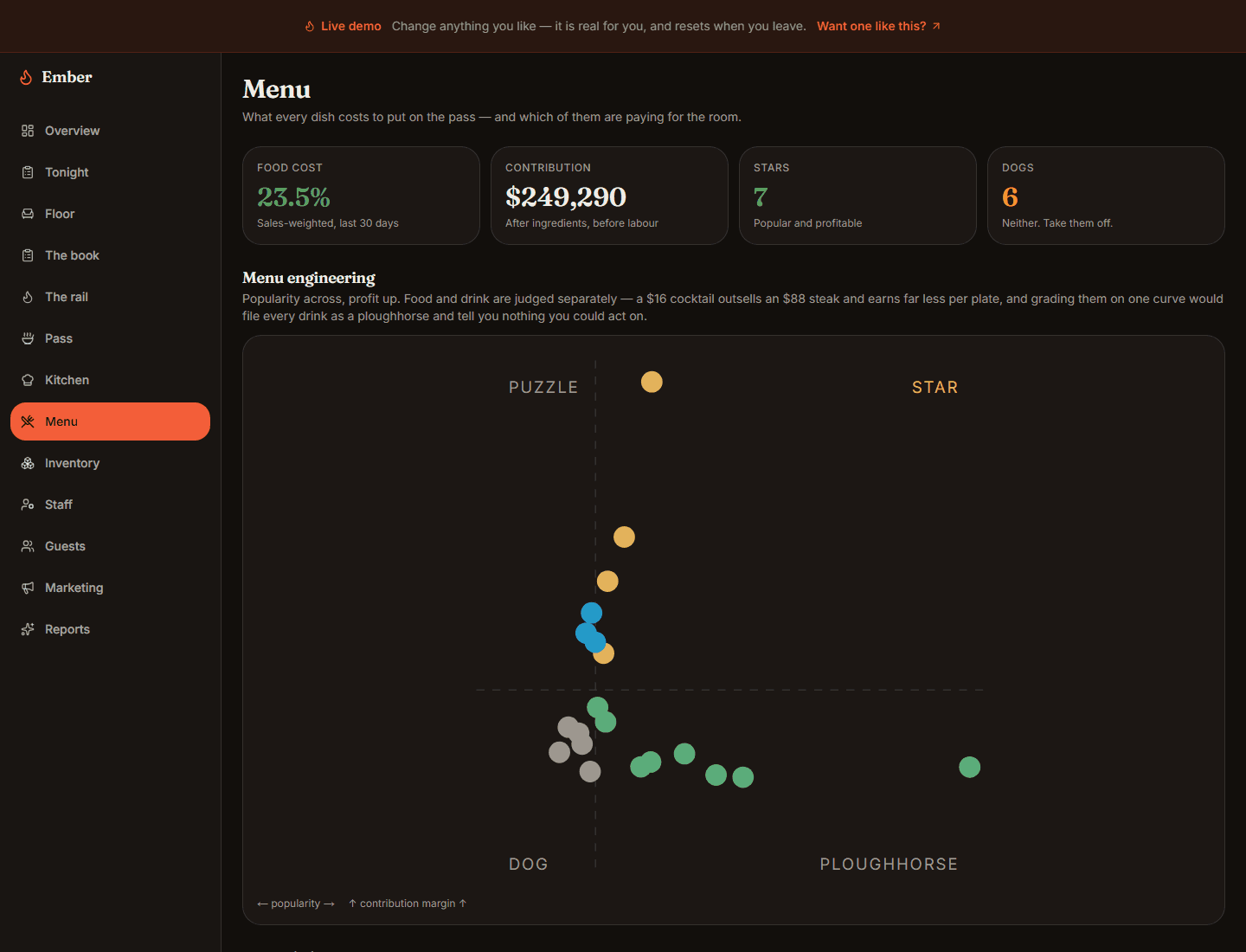
Every dish plotted on popularity against margin: stars, ploughhorses, puzzles and dogs. It needs plate cost and sales mix in the same place at the same time — which is exactly what a POS bolted onto a stock spreadsheet can never give you.
Food-cost variance
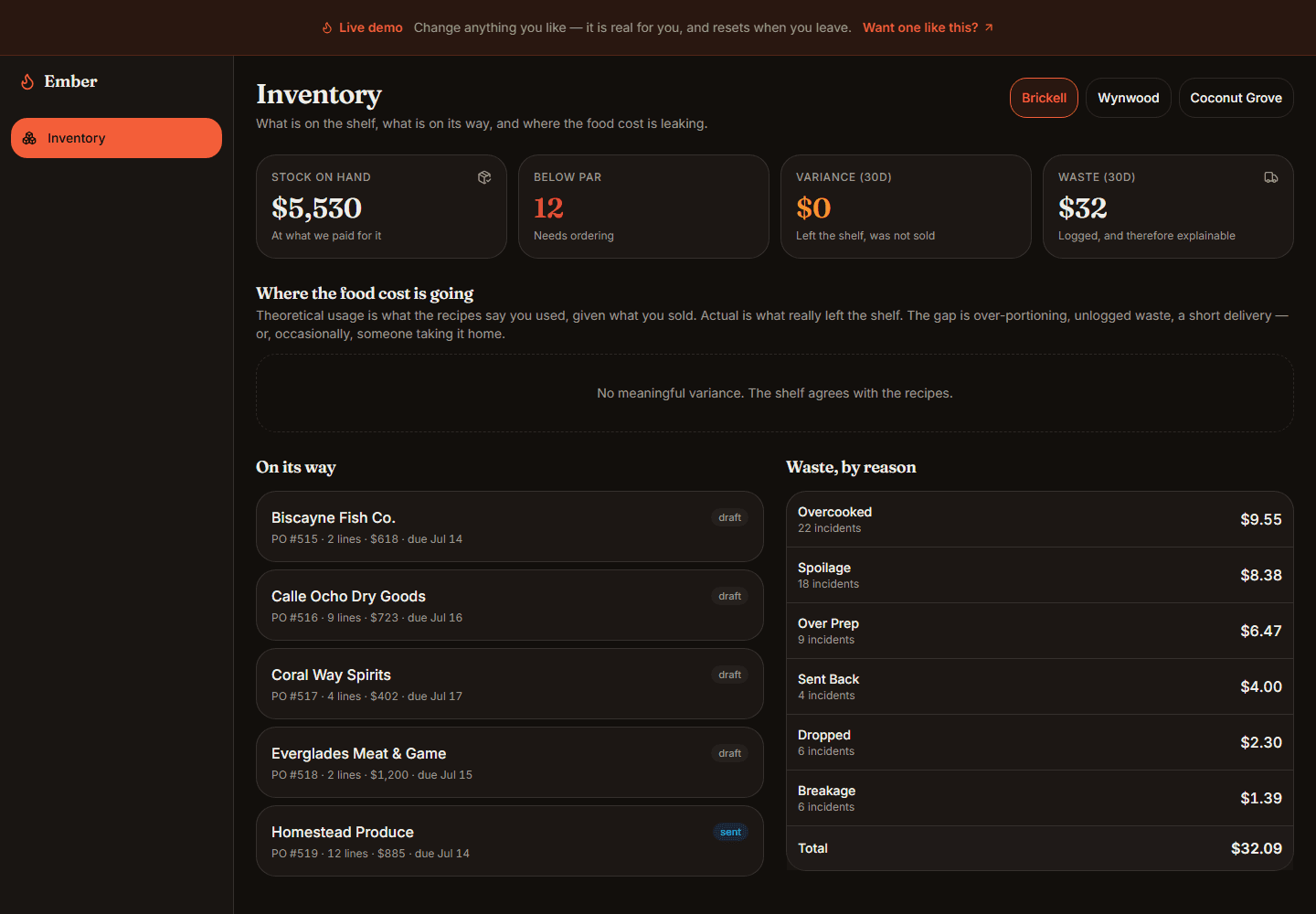
Theoretical usage is what the recipes say you used. Actual is what left the shelf. The gap is over-portioning, unlogged waste, a short delivery — or someone taking it home. Most restaurants lose points of food cost here and blame the menu.
Split cheques that reconcile
By seat, by item, or evenly. A hundred dollars split three ways is not three lots of $33.33 — that is $99.99 and a till that does not balance. The parts sum back to the whole by construction, and so does the tip pool.
Twelve roles, twelve screens
A restaurant is not one job. The host gets the book and the door; the line cook gets one rail; the chef gets the 86 list and plate cost; the owner gets prime cost across all three rooms.
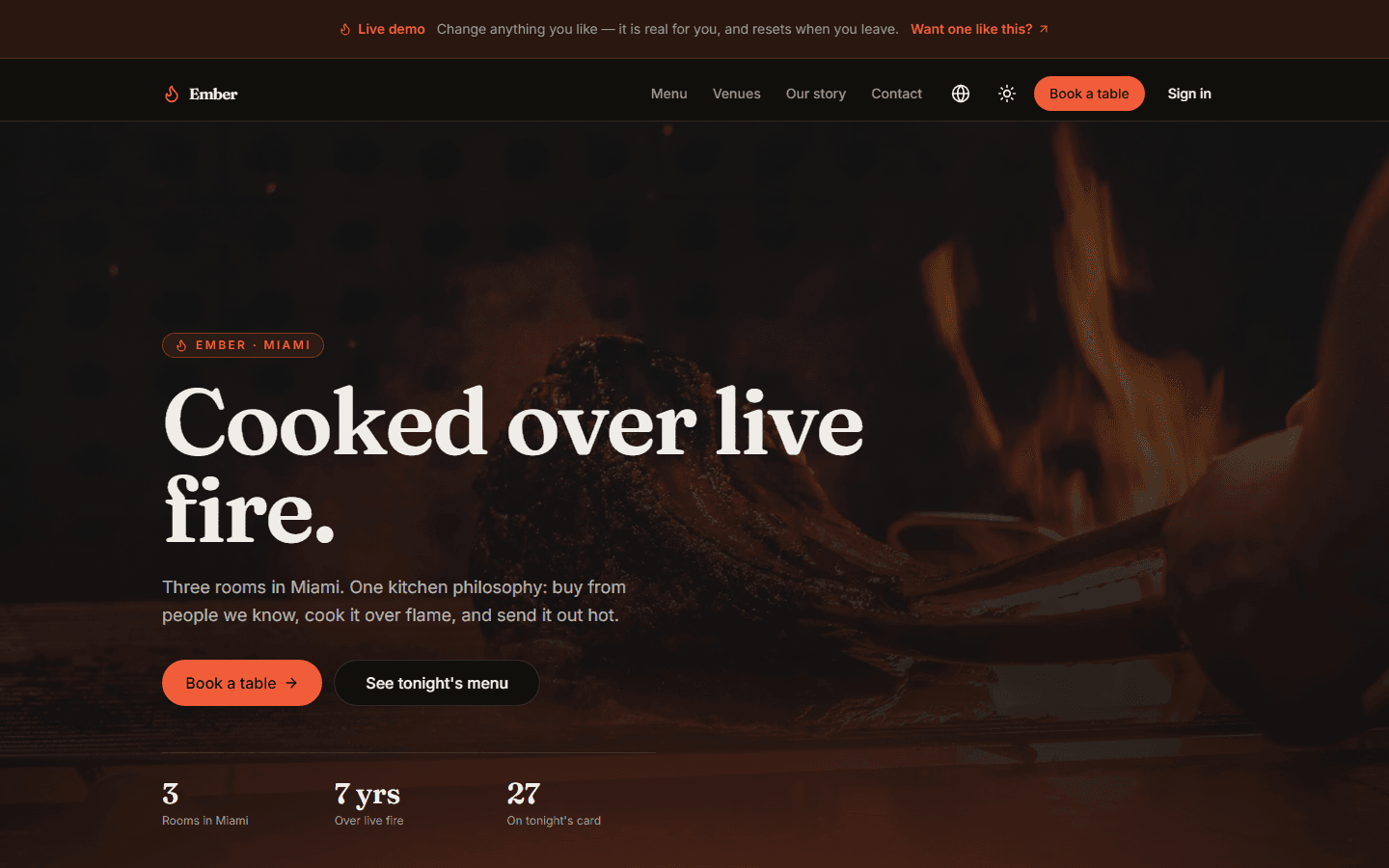
The product, not a mockup.
Screenshots taken straight from the running application.
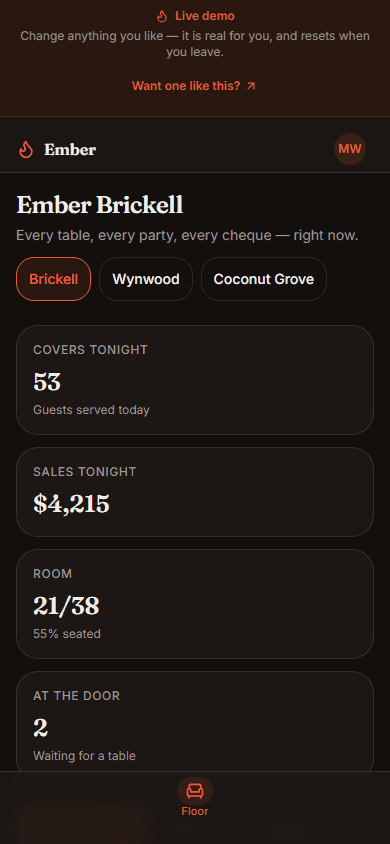
Built for the phone in your customer's hand.
Every screen in Emberis designed mobile-first and tested at 390px — because that's where the bookings actually happen.
Explore it yourself
No sign-up, no password — open the Ember demo and pick a role to see exactly what that person sees.
- OwnerPrime cost across all three rooms, ranked worst-first — the room that needs you should not be something you go looking for.
- HostThe book, the waitlist, and every table in the room. Seat a party and watch it move.
- ServerTheir own section and their own cheques — never another server's.
- ChefEvery station, the 86 list, plate cost and what the kitchen is throwing away.
- Line CookOne rail, one station. Fire, cook, bump — and the bump is the whole card.
- PurchasingStock, par levels, suppliers, and where the food cost is leaking.
This is a demo, so it's read-only— click anything you like, you can't break it. Want these features (and more) built around your own business? Let's build yours.
Want one of these for your business?
Embertook a real business from spreadsheets to software. Tell us how yours runs today and we'll map out what it takes.